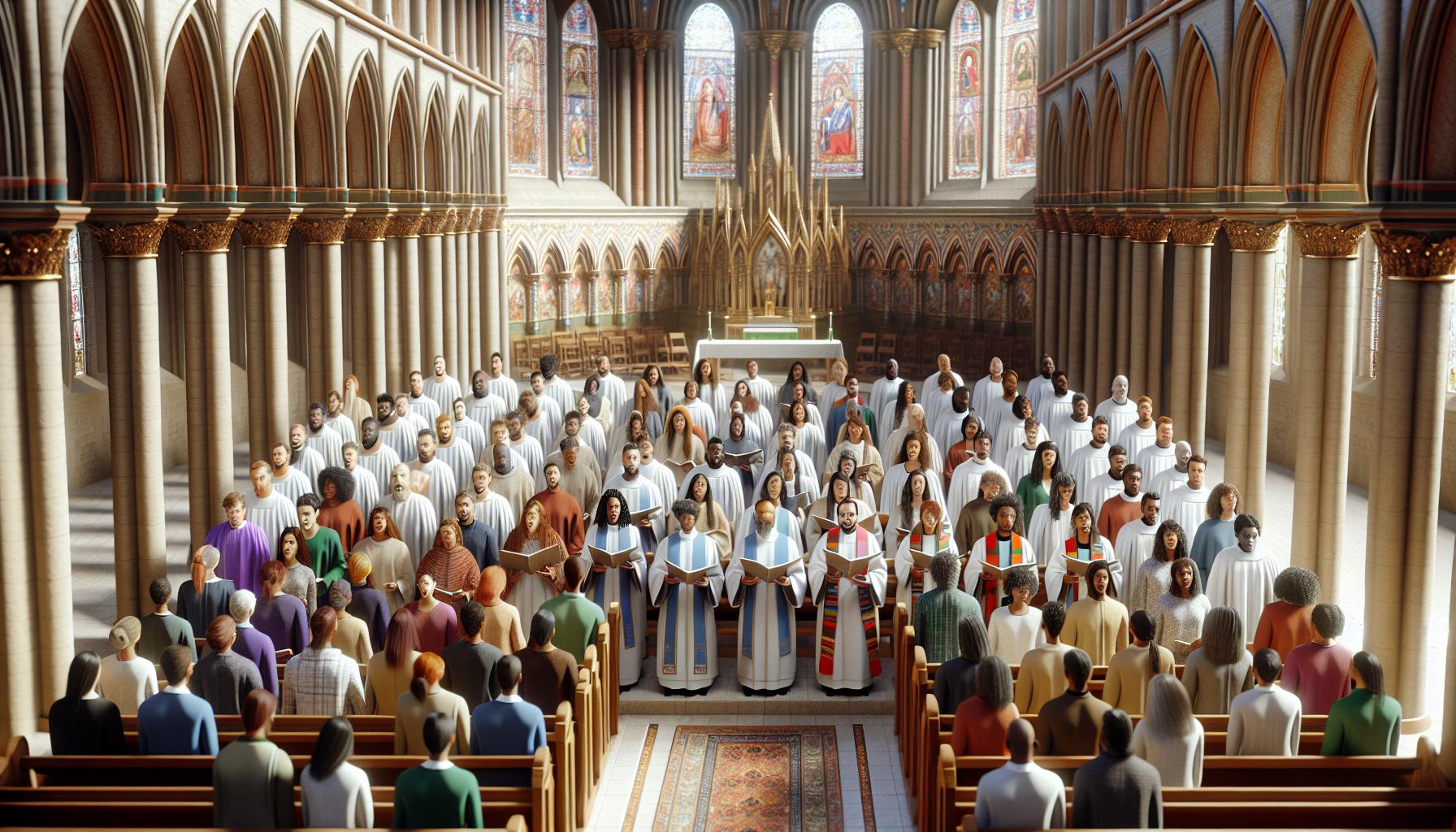
Ambrosian Chants: Preserving Sacred Melodies
Dive into the serene world of Ambrosian chants, a treasured cornerstone of Western liturgical music. Originating from the ancient Church of Milan, these chants are a testament to the rich spiritual and cultural tapestry of early Christianity.
You’ll discover that Ambrosian chants aren’t just relics of the past; they’re living traditions that continue to inspire and elevate the soul. Their unique melodies and modes set them apart from the more widely known Gregorian chants, offering a glimpse into a distinct ecclesiastical heritage.
As you explore the history and significance of these enchanting melodies, you’ll find yourself transported to a time of profound devotion and artistic expression. Ambrosian chants are more than just notes on a page; they’re a gateway to the divine, a journey through the echoes of ancient worship.
History of Ambrosian Chants
The story of Ambrosian chants stretches back to Milan in the 4th century, where it first emerged within the Christian Church. Named after St. Ambrose, the Bishop of Milan, these chants reflect his influential contribution to the liturgy and hymnody of the church. St. Ambrose is credited with introducing antiphonal singing, which is a call-and-response style performance, to Western Christianity.
Over the centuries, Ambrosian chants have withstood the test of time, evolving while maintaining their distinctive characteristics. Unlike Gregorian chants which gained widespread use in the Roman Catholic Church, Ambrosian chants remained regionally specific to the Archdiocese of Milan, preserving their unique identity.
| Centuries | Development |
|---|---|
| 8th-12th | Codification of melodies |
| 13th-15th | Manuscript notations refinement |
| 16th | Catholic Church reforms, preservation efforts |
| 20th | Liturgical revivals and recordings |
During the Middle Ages, these chants were meticulously codified, ensuring their melodies and modes were anchored in tradition. Efforts to transcribe these sounds into notations in the 13th to 15th centuries aided in their preservation. Even the Church reforms in the 16th century, which standardized many liturgical practices, could not diminish the importance of Ambrosian chants in Milan.
In the modern era, renewed interest has sparked liturgical revivals and recorded versions of these chants, further cementing their role as a vibrant part of sacred music. Seminaries and choirs dedicated to Ambrosian liturgy actively practice and perform these chants, allowing them to resonate with new generations.
Understanding the history of Ambrosian chants gives you a glimpse into the resilience and adaptability of sacred traditions. Each note and rhythm of Ambrosian chant carries with it a legacy of spiritual significance that has been handed down through time. As the melodies fill the air of Milanese churches today, they serve as a living connection to the past and a testament to the enduring nature of liturgical arts.
The Distinctive Characteristics of Ambrosian Chants

When you immerse yourself in the world of Ambrosian chants, you’ll notice they stand apart from other forms of liturgical music, such as Gregorian chants. Understanding their characteristics helps you appreciate why they’ve stood the test of time.
Melodic Structure
Ambrosian chants possess a unique melodic structure which is instantly recognizable:
- There’s a rich and complex melody, distinct from the more straightforward Gregorian style.
- You’ll find Ambrosian chants often start and end on different notes, making them dynamic.
- The use of a wider range of musical scales lends these chants a particular sonic diversity.
Ritual Significance
Each chant is not just music – it’s also deeply rooted in the rituals of the Ambrosian Rite. Different chants are designated for specific times and services, creating an intimate connection between the music and its liturgical purpose.
Regional Flavor
What’s truly captivating about Ambrosian chants is their regional flair. They’ve largely remained within the Milanese tradition, avoiding the standardization that befell Gregorian chants. This has allowed Ambrosian chants to maintain a freshness and individuality that’s remarkable.
Lyrics and Language
The textual content of Ambrosian chants is also worth your attention:
- Lyrics often exhibit poetic complexity, with intricate verses.
- Latin used in these chants can sometimes differ from classical liturgical Latin, underscoring their regional origin.
Performance Practice
Finally, how Ambrosian chants are performed can vary widely from one congregation to another. This lack of uniformity adds to their charm and ensures that each performance is a new experience.
As you dive deeper into the world of Ambrosian chants, you’ll continue to uncover layers of history and tradition interwoven with every note and word. These nuances confirm the Ambrosian chants as vital relics of ecclesiastical history.
The Influence of Ambrosian Chants on Western Liturgical Music

Ambrosian chants have woven a vibrant thread through the tapestry of Western liturgical music’s history. Deeply rooted in the heart of Milanese worship, these chants have had an unquestionable impact on the sounds and rituals that define Christian services far beyond their regional inception.
Your journey into the world of liturgical music would be incomplete without acknowledging how Ambrosian melodies have seeped into the broader Western repertoire. Musicians and composers, struck by the complexity and beauty of these chants, often drew inspiration for their own compositions. The characteristics of Ambrosian chants, such as their intricate melodic lines and the use of a broader range of musical scales, have informed and shaped the development of musical forms both within and outside the Church.
Consider this: much of what you hear in Western religious compositions echoes the structural nuances pioneered by Ambrosian tradition. The versatility seen in these chants, with variations for different liturgical occasions, encouraged a flexible approach to liturgical music composition. This willingness to adapt and the emphasis on local traditions fostered musical diversity within the Christian canon.
Historical records point to various instances where Ambrosian influence is unmistakable. For example, in the 10th and 11th centuries, key figures in church music were known to travel between Milan and other important musical centers, sharing their knowledge and carrying with them the seeds of Ambrosian melody which would blossom in new soil.
- Ambrosian chants encouraged musical diversity
- Influenced composition forms within and outside the Church
- Historical travels of musicians spread their impact
Musicologists studying the evolution of church music often find traces of Ambrosian style in the strangest of places, from remote monasteries to the works of famous Renaissance composers. While the spread of Gregorian chant has, over the centuries, overshadowed some of the unique features of the Ambrosian rite, its subtle yet persistent influence remains an essential part of the DNA of Western liturgical music.
The Role of Ambrosian Chants in Early Christianity

Ambrosian chants played a pivotal role in the spiritual and liturgical framework of early Christianity. You’ll find that these unique melodies served as more than just a form of musical expression among early Christians; they were a vehicle for conveying the sacred texts and teachings of the faith.
Historical records show that Ambrosian chants were integral in worship services, especially within the Archdiocese of Milan, where they originated. Their significance went beyond the walls of Milanese churches, influencing regions far and wide as Christianity spread. What truly set Ambrosian chants apart were their richness and variety, encouraging a deeper reflection on the Christian mysteries they narrated.
These chants were not just a backdrop to liturgical actions; they shaped the very atmosphere of the services. The characteristics of the chants include:
- Elaborate melodic structures
- A broad array of musical scales
- An intimate connection with liturgical texts
The synthesis of these elements meant that Ambrosian chants were not only engaging listeners but also educating them. The faithful would absorb the stories and messages of the Bible through the medium of music, turning each liturgical celebration into a multifaceted sensory experience.
At a time when most congregants couldn’t read, these melodies were crucial in disseminating the core tenets of Christianity. Education through music was a powerful tool, and Ambrosian chants functioned effectively in this capacity, embedding biblical passages into the hearts and minds of believers.
While these chants might not have the familiarity of their Gregorian counterparts, they were no less influential in the practice and propagation of early Christian rites. Their legacy in religious music is undisputed, as they continue to be an inspiration to those who come across their beauty and spiritual potency.
Understanding the historical impact of Ambrosian chants gives you an appreciation for how music and faith have been intertwined, nurturing the growth of Christianity through sound and song.
Preserving the Tradition of Ambrosian Chants

As you’re delving into the intricate world of liturgical music, it’s clear that Ambrosian chants aren’t just relics of the past but living traditions that require active preservation. These chants, with their rich history and profound spiritual significance, call for efforts both to maintain and to revitalize their usage within the church and beyond.
The Role of Communities and Churches
- Activating parishes and faith communities to regularly incorporate Ambrosian chants into worship.
- Educating younger generations through workshops and religious education programs.
- Recording and archiving performances to make them accessible to a wider audience.
Technologies and Digitization
In your quest to preserve these ancient melodies, digital technology plays a pivotal role. Archiving recordings, creating digital libraries, and even developing apps for learning chants ensures that the tradition stays alive and reaches younger, tech-savvy worshippers. The digital realm offers immense possibilities for both conservation and education.
Collaboration with Music Scholars
Scholarship adds another layer of preservation. By working with musicologists and historians, you can:
- Uncover original manuscripts and scores.
- Interpret historical significances and contextual backgrounds.
- Develop performances that are both authentic and engaging for today’s listeners.
All of these elements coalesce to keep the tradition of Ambrosian chants robust in the modern day. Engaging with this musical heritage not only pays homage to the past but also enriches contemporary worship, stitching a thread through history that connects the early followers of Christianity to the current faithful worshipping in churches around the globe. Through preservation, these chants continue to play a vital role in the fabric of Christian liturgy, resonating with a timeless quality that transcends the ages.
Conclusion
You’ve seen how vital it is to keep the tradition of Ambrosian chants alive in today’s worship practices. By embracing the rich tapestry of these ancient melodies, you’re honoring a legacy that connects modern believers with early Christian traditions. It’s clear that through community effort, technology, and scholarly collaboration, these sacred tunes can continue to resonate. Remember, it’s not just about looking back—it’s about carrying a piece of history forward, ensuring that future generations can experience the depth and beauty of Ambrosian chants. Your role in this endeavor is crucial, and with each step you take, you’re helping to weave this invaluable musical heritage into the fabric of contemporary faith.