Civil Rights Slogans: The Voice of Justice and Unity
Civil rights slogans have long been the rallying cries that unite individuals in the fight for equality and justice. These powerful phrases encapsulate the struggles, hopes, and dreams of generations striving for a better world. They’re not just words; they’re a call to action, a demand for change, and a beacon of hope for countless people. Whether etched on banners, chanted in the streets, or shared across social media, these slogans remind us of the ongoing battle for civil rights and the importance of standing together. Let’s explore the impact and history behind some of the most iconic civil rights slogans that have inspired movements around the globe.
The Power of Civil Rights Slogans
When you hear a civil rights slogan, it’s not just a catchy phrase—it’s a battle cry for justice and equality. These powerful mottos have shaped history, pushing forward the civil rights movement. They’re not just words; they’re a rallying point that brings people together, united in a common cause. Let’s explore how civil rights slogans have fueled movements and why they remain so impactful today.
Civil rights slogans like “I Am a Man” and “Black Lives Matter” do more than just state an opinion. They express deep truths about human rights and dignity. When you see these slogans on posters, hear them chanted in the streets, or read them online, they’re doing several important jobs:
- Raising Awareness: They highlight issues that might not be on everyone’s radar.
- Building Community: They connect people who share the same values and goals.
- Encouraging Action: They inspire people to get involved, whether that’s through protests, voting, or educating others.
One of the reasons these slogans are so powerful is that they’re accessible. You don’t need a history degree to understand the message of “Equality Now.” These phrases cut straight to the heart of the issue, making complex ideas easy for everyone to grasp.
You’ve probably seen these slogans at marches, on social media, or maybe even on T-shirts. Each time they’re used, they’re not just reminding us of the struggles of the past; they’re also pointing us toward a future where every person’s rights are respected and protected. Civil rights slogans are like seeds of change, planted in the minds of all who hear them. They grow into movements that can shake the foundation of society, reminding everyone that change isn’t just possible; it’s necessary.
So, the next time you hear a civil rights slogan, think about the weight it carries. These slogans are more than just words; they’re a voice for those who’ve been silenced, a beacon of hope, and a reminder that the fight for justice is ongoing. They remind us that we’re part of something bigger than ourselves, pushing us to stand up for what’s right, together.
The Importance of Unity in the Fight for Equality
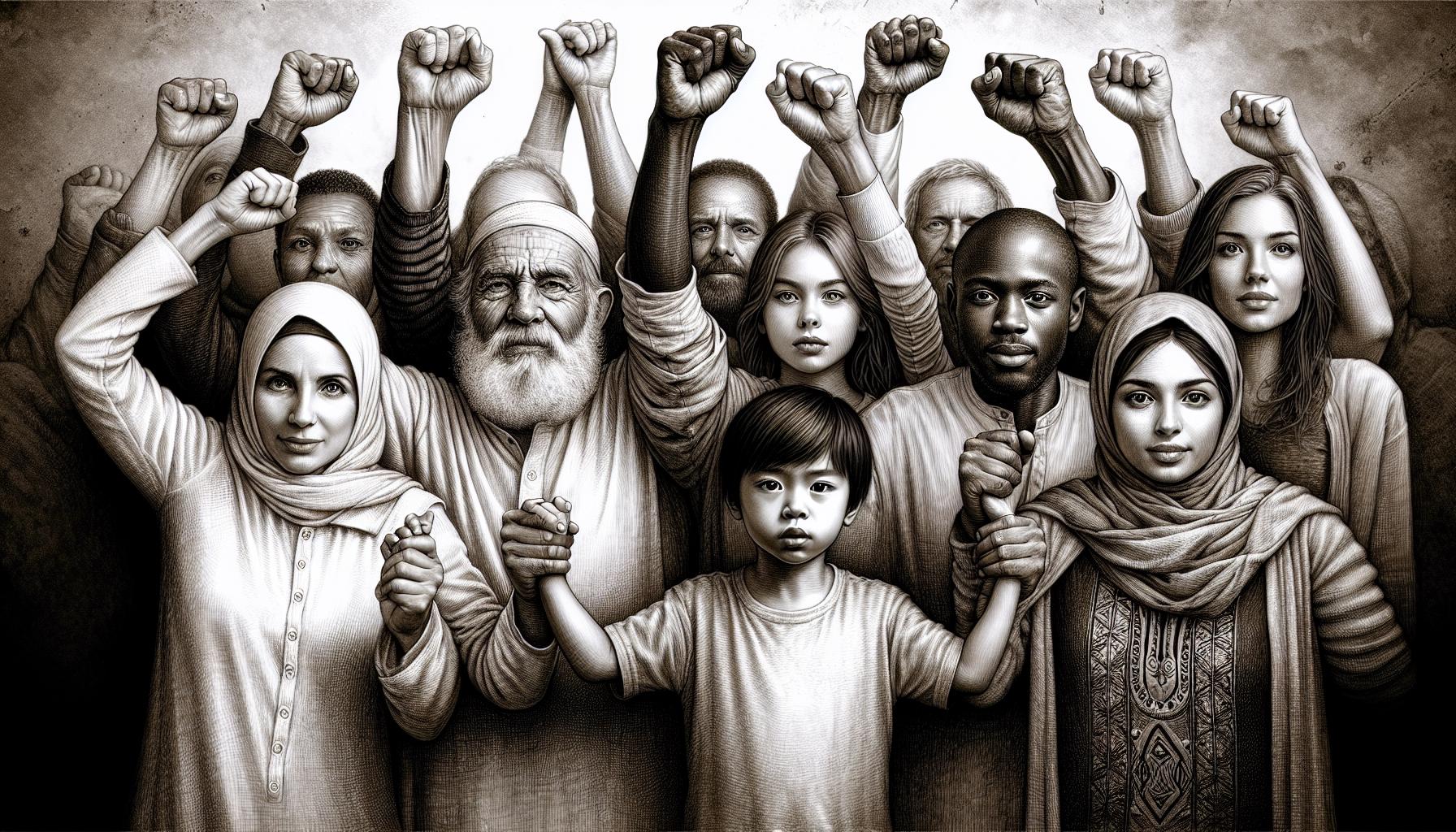
In the ongoing battle for civil rights, unity isn’t just a nice idea – it’s crucial. Unity brings together people from all walks of life, combining their strengths and voices to fight for a common goal: equality. When you stand united, you’re part of a powerful force that can bring about significant change.
Why Unity Matters
Let’s break it down. Imagine trying to lift a heavy object all by yourself. Now, picture what happens when several people come together to lift it. It becomes easier, right? That’s exactly how unity works in civil rights movements. Each person contributes their unique abilities and energy, making the collective effort much stronger.
- Shared Goals: With unity, everyone’s focused on the same goal – equality for all. This common purpose helps guide actions and strategies.
- Diverse Perspectives: Unity doesn’t mean everyone’s the same. It brings together diverse viewpoints, which can lead to more creative and effective solutions.
- Strength in Numbers: There’s power in numbers. A united group can draw more attention to its cause, influencing public opinion and policy changes.
Unity in Action
Throughout history, successful civil rights movements have shown the power of unity. Take, for instance, the Montgomery Bus Boycott or the March on Washington. These events weren’t just about individuals making a stand; they were about communities coming together, showing the world the strength of their collective voice.
- Community Building: Unity helps build a supportive community where people encourage and look out for each other.
- Awareness and Education: United groups can spread their message far and wide, educating others about their cause and why it matters.
By standing together, you’re not just a drop in the ocean. You’re part of a mighty wave, capable of eroding the toughest barriers of inequality. The fight for civil rights has always been about unity – joining hands, sharing hearts, and working together for a world where everyone is treated fairly and with respect.
The History of Civil Rights Movements
Civil rights movements have always played a pivotal role in shaping societies towards justice and equality. From the early struggles against racial segregation to contemporary battles for LGBTQ+ rights, these movements have been foundational in challenging and changing unfair laws and social norms.
The Civil Rights Movement in the 1960s, perhaps the most renowned period, highlights the struggle against racial segregation and discrimination in the United States. During this time, leaders like Martin Luther King Jr. and Rosa Parks became household names, their actions sparking significant changes including the Civil Rights Act of 1964 and the Voting Rights Act of 1965. These laws were monumental in dismantling racial segregation and ensuring voting rights for African Americans.
Beyond the United States, civil rights movements have taken various forms worldwide. For instance, the Anti-Apartheid Movement in South Africa was instrumental in ending the system of apartheid, leading to Nelson Mandela’s election as the country’s first Black president in 1994. This global struggle not only changed a nation but also inspired countless other movements across the globe.
In recent years, the focus of civil rights movements has broadened. Issues like gender equality, LGBTQ+ rights, and disability rights have gained prominence. The #MeToo Movement, for example, has brought the conversation about sexual harassment and assault into the mainstream, empowering survivors to speak out and demand change.
The evolution of civil rights movements shows the dynamic nature of the fight for equality and justice. Each struggle, while unique in its context and issues, shares the common goal of challenging injustices and creating a fairer society. Through peaceful protests, legal battles, and public awareness campaigns, these movements demonstrate the power of collective action in driving societal change.
The Role of Slogans in Inspiring Change
Slogans play a crucial role in civil rights movements. They’re not just catchy phrases; they’re powerful tools that can inspire action and bring people together. When you understand their impact, you’ll see why they’re so important in fights for justice.
Slogans are easy to remember. This might seem simple, but it’s incredibly effective. In the middle of a protest or campaign, a straightforward and memorable slogan ensures the message sticks with you long after the event. It’s like a catchy tune that you can’t get out of your head, but instead of a tune, it’s a call for change.
They also create unity. Imagine thousands of voices united in a single chant. Slogans bring individuals together, transforming them into a collective force with a shared goal. This unity makes the message louder and more powerful, compelling others to listen and take action.
Slogans clarify what’s at stake. Sometimes, the issues at hand can seem complex and overwhelming. A good slogan breaks down these big ideas into something clear and understandable. It highlights the essence of the fight, making it clear what is being fought for and why it matters.
Also, slogans can spark conversations. When you wear a T-shirt with a civil rights slogan or share one on social media, you’re inviting discussion. These conversations can lead to a greater awareness and understanding of the issues, which is crucial for inspiring change.
Finally, slogans serve as a reminder of past victories. They connect current movements to historical fights for justice, showing that change is possible. This link to the past can be incredibly motivating, reminding everyone involved that progress can and will be made.
By harnessing the power of language, slogans in civil rights movements do more than just capture attention—they motivate, unite, and inspire people to strive for a better future.
Iconic Civil Rights Slogans that Shaped Movements
Throughout history, civil rights movements have harnessed the power of words to rally support and inspire change. Slogans, in particular, have played a critical role in unifying groups and making complex ideas understandable and relatable. When you hear these phrases, they’re not just catchy sayings; they encapsulate the essence of the fight for justice and equality. Let’s explore some of the most iconic civil rights slogans that have left a lasting impact on societal movements.
“I Am a Man” became a rallying cry during the 1968 Memphis sanitation workers’ strike. It symbolized the struggle for dignity and respect in the face of discrimination and poor working conditions. This slogan wasn’t just about a labor dispute; it was a bold statement against the systemic racism that African American men faced daily.
“No Justice, No Peace” echoes through streets whenever injustice is perceived. It emphasizes the idea that peace isn’t just the absence of conflict, but the presence of justice. As a slogan, it calls for action and accountability, making it a timeless reminder that the fight for civil rights requires both awareness and response.
“Equality for All” speaks to the universal desire for equal rights and opportunities, regardless of race, gender, ethnicity, or sexual orientation. This broad, inclusive message has helped unite diverse groups under a common goal: achieving a society where everyone is treated with fairness and respect.
“Si, Se Puede” (Yes, We Can) gained prominence during the farm workers’ rights movement led by Cesar Chavez and Dolores Huerta. This slogan embodies the power of hope and collective effort. It’s a testament to what can be achieved when people come together to fight for a common cause.
“Black Lives Matter” emerged in recent years as a response to systemic racism and police brutality. This powerful slogan underscores the importance of recognizing and addressing the injustices faced by Black communities. It’s not just a call to action—it’s a demand for recognition, respect, and change.
These slogans remind us that words have power. They galvanize communities, inspire action, and bring to light the issues that demand attention. As you reflect on these iconic phrases, remember their role in shaping and defining the movements they represent. They’re not just part of history; they continue to influence and guide the path towards justice and equality.
Conclusion
Embracing the essence of civil rights slogans, you’ve seen how they’re not just echoes of past struggles but catalysts for ongoing change. They encapsulate the fight for justice and equality, proving that words have the power to unite, inspire, and drive forward movements that shape our society. Remember, every time you voice these slogans, you’re not just recalling history; you’re actively participating in the creation of a future where equality isn’t just an ideal, but a reality. Let’s carry forward the legacy of these powerful phrases, understanding that together, we’re stronger and capable of overcoming the barriers to justice and equality. Your voice, combined with the voices of countless others, can continue to push the boundaries of what’s possible, making every slogan a stepping stone towards a more equitable world.